Your brakes are the single most important safety system in your vehicle. That’s not an exaggeration. When you’re coming down from the mountains on I-25 or navigating stop-and-go traffic on Academy Boulevard, you need to know your brakes will perform when it counts.
At Bowers Automotive, we’ve been helping Colorado Springs drivers stay safe on the road with expert brake repair services for years. Our ASE-certified technicians work on all types of import and domestic cars, trucks, and SUVs, diagnosing and repairing everything from basic brake pad replacements to complex ABS system issues. Whether you’re hearing a strange noise or your brake pedal feels different than usual, we’re here to help you understand what’s going on and get it fixed right.
Key Takeaways
- Watch for warning signs like squeaking, grinding, or a spongy brake pedal—these indicate your brakes need immediate attention.
- Colorado Springs’ mountain terrain, steep grades, and stop-and-go traffic cause brakes to wear faster than in flat regions.
- Professional brake repair services include pad replacement, rotor machining, brake fluid flushes, and ABS system diagnostics.
- Choose an ASE-certified brake repair shop that offers transparency, quality parts, and warranties on their work.
- Don’t delay brake repairs—small issues quickly become expensive safety hazards when ignored.
- Regular brake inspections help catch wear early and keep you safe on Colorado Springs roads.
Signs Your Brakes Need Immediate Attention
Your car gives you warning signs before brake problems become dangerous. The trick is knowing what to listen and feel for.
Squeaking or squealing is usually your first clue. Most brake pads have built-in wear indicators, small metal tabs that contact the rotor when the pad material gets thin. That high-pitched noise? It’s your brakes telling you it’s time for service.
Grinding sounds are more serious. If you’re hearing metal-on-metal contact, your brake pads are likely worn through completely. At this point, you’re damaging your rotors with every stop, and the repair bill is going up fast.
Other warning signs include:
- Vibrations or pulsing in the brake pedal or steering wheel when stopping
- Longer stopping distances than you’re used to
- A spongy or soft brake pedal that sinks toward the floor
- The vehicle pulling to one side when you apply the brakes
- ABS warning light illuminated on your dashboard
If you notice any of these symptoms, don’t wait. Brake problems don’t fix themselves, and they typically get worse (and more expensive) the longer you put them off. We recommend scheduling an inspection as soon as possible to catch issues before they become safety hazards.
Common Brake Problems and Their Causes
Understanding what can go wrong with your brakes helps you communicate better with your mechanic and make informed decisions about repairs. Let’s break down the most frequent issues we see.
Worn Brake Pads and Rotors
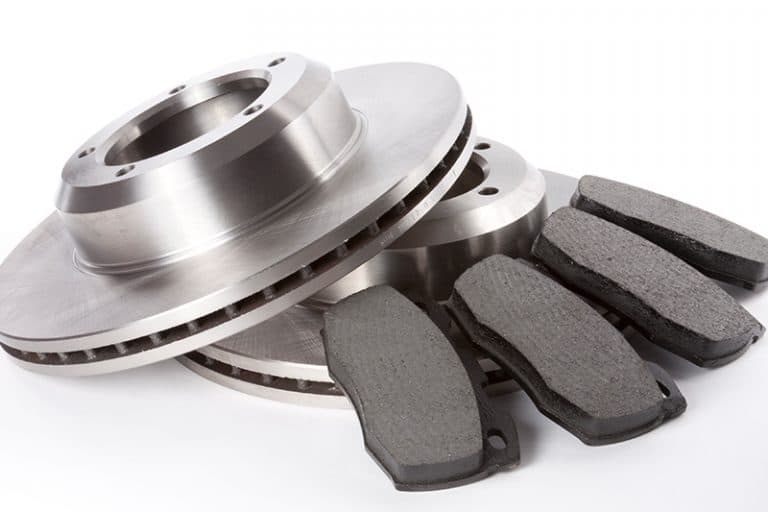
Brake pads are designed to wear out. They’re made of friction material that presses against your rotors to slow your vehicle, and that constant contact gradually wears them down. It’s not a defect: it’s just how brakes work.
How quickly your pads wear depends on several factors: your driving habits, the terrain you typically drive, and the quality of the pads themselves. City driving with frequent stops wears pads faster than highway cruising. And as you’ll see later, Colorado Springs driving presents some unique challenges.
Rotors can develop problems too. Over time, the friction from brake pads can create grooves, scoring, or even cracks in the rotor surface. When this happens, you might notice vibrations when braking or hear unusual sounds. Sometimes rotors can be machined (resurfaced) to restore a smooth surface. Other times, they need to be replaced entirely.
Brake Fluid Leaks and Contamination
Your brake system is hydraulic, meaning it uses fluid to transfer the pressure from your foot on the pedal to the brake calipers at each wheel. If there’s a leak anywhere in the system, whether in the brake lines, hoses, calipers, or master cylinder, you’ll lose that hydraulic pressure. The result? Reduced stopping power or, in severe cases, brake failure.
Brake fluid can also become contaminated over time. It absorbs moisture from the air, which lowers its boiling point and can cause corrosion inside the brake system. Old, contaminated fluid doesn’t perform as well, especially under heavy braking when temperatures climb. That’s why brake fluid testing and flushing are important parts of brake maintenance.
What to Expect During a Professional Brake Inspection
If you’ve never had a brake inspection before, here’s what happens when you bring your vehicle in.
A thorough brake inspection starts with a visual examination. The technician will check the thickness of your brake pads and shoes to see how much material is left. They’ll examine your rotors and drums for wear patterns, grooves, cracks, or warping. The calipers get inspected for proper operation, and the brake hoses and lines are checked for leaks, cracks, or damage.
The master cylinder, which creates the hydraulic pressure for your entire brake system, gets attention too. If it’s failing, you might notice a spongy pedal or brake fluid leaking near the firewall.
For vehicles with anti-lock braking systems (ABS), the inspection includes checking the ABS sensors and related components. If your ABS light is on, diagnostic equipment can pull trouble codes to pinpoint the issue.
At Bowers Automotive, we believe in transparency. After the inspection, we’ll explain exactly what we found, what needs to be addressed now, and what you can keep an eye on for the future. We show you the parts when possible and discuss your options so you can make the best decision for your vehicle and budget. No pressure, no scare tactics. Just honest information.
Types of Brake Repair Services
Brake repair isn’t one-size-fits-all. Depending on what’s wrong with your system, you might need one or several of these services.
Brake Pad and Shoe Replacement
This is the most common brake service. When your pads or shoes are worn, we replace them with quality parts. We’ll also inspect the rotors and other components while we’re in there.
Rotor and Drum Machining or Replacement
If your rotors or drums are worn but still within specification, machining can restore a smooth braking surface. If they’re too thin or damaged, replacement is the better option for safety and longevity.
Brake Fluid Testing and Flushing
We can test your brake fluid to check for contamination and moisture content. If it’s degraded, a brake fluid flush removes the old fluid and replaces it with fresh fluid, restoring proper hydraulic performance.
Brake System Bleeding
Air in your brake lines causes that spongy pedal feel and reduces braking effectiveness. Bleeding the system removes air bubbles and ensures solid, responsive braking.
Brake Hose and Line Repair
Cracked, worn, or leaking brake hoses and lines need to be replaced to maintain hydraulic integrity.
Master Cylinder Replacement
A failing master cylinder can cause a variety of symptoms, from a sinking brake pedal to complete brake loss. When it goes, it needs to be replaced.
ABS Brake Repair
Anti-lock brake system problems can be electrical, mechanical, or both. We diagnose ABS issues using specialized equipment and repair or replace components as needed.
Our technicians work on disc brakes, drum brakes, and ABS systems on all makes and models. Whether you drive a compact car, a full-size truck, or an SUV, we’ve got you covered.
How Colorado Springs Driving Conditions Affect Your Brakes
Living in Colorado Springs means your brakes work harder than they would in many other parts of the country. Here’s why.
Mountain Driving and Steep Grades
Whether you’re heading up to Woodland Park, coming down Ute Pass, or navigating the grades around Monument, mountain driving puts serious stress on your brake system. Descending steep hills requires constant braking, which generates heat. That heat can accelerate pad wear and cause brake fade if the system overheats.
If you regularly drive in the mountains, your brakes will wear faster than someone who sticks to flat terrain. It’s just physics.
Elevation Changes in Daily Commutes
Even within the city, Colorado Springs has significant elevation changes. Driving from downtown to the Broadmoor or from Briargate down to Fountain involves enough grade changes to keep your brakes working.
Variable Weather Conditions
Colorado Springs weather can be unpredictable. Snow, ice, and sudden temperature swings all affect braking. Cold temperatures can make brake components more prone to certain issues, while road treatments and moisture can accelerate corrosion on brake hardware.
Stop-and-Go Traffic
Areas like Powers Boulevard, Academy Boulevard, and I-25 during rush hour mean lots of braking. Frequent stops wear pads faster than steady highway driving.
Because of these local conditions, we recommend Colorado Springs drivers pay close attention to their brakes and have them inspected regularly. Catching wear early prevents more expensive repairs down the road.
Choosing a Reliable Brake Repair Shop
Not all brake shops are created equal. Here’s what to look for when choosing where to take your vehicle.
ASE-Certified Technicians
ASE certification means the technicians have passed standardized tests demonstrating their knowledge and skills. It’s not the only measure of competence, but it’s a good baseline indicator that the shop takes training seriously.
Experience with Your Vehicle Type
Some shops specialize in certain makes or types of vehicles. If you drive an import, make sure the shop has experience working on your brand. Same goes for trucks and SUVs, which can have different brake setups than passenger cars.
Transparency and Communication
A good shop explains what’s wrong, shows you the problem when possible, and gives you options. They don’t pressure you into unnecessary repairs or use scare tactics to upsell services.
Quality Parts
Ask what kind of parts the shop uses. Cheap brake pads might save money upfront but can wear faster, perform worse, and potentially damage rotors. OEM-quality or better parts are worth the investment.
Warranty
Reputable shops stand behind their work. Look for shops that offer warranties on parts and labor.
Reviews and Reputation
Online reviews can tell you a lot about how a shop treats its customers. Look for patterns in the feedback, both positive and negative.
Convenience
Consider location, hours, and whether the shop offers amenities like shuttle service or loaner vehicles if repairs will take a while.
At Bowers Automotive, we check all these boxes. Our ASE-certified technicians have the experience to work on all makes and models, and we’re committed to honest, straightforward service. We explain what we find, discuss your options, and only recommend repairs that are actually necessary.
Schedule Your Brake Repair in Colorado Springs Today
Your brakes aren’t something to gamble with. If you’re noticing warning signs or it’s just been a while since your last inspection, now is the time to get them checked.
Bowers Automotive has been serving Colorado Springs drivers with reliable, honest brake repair services. Our team of ASE-certified technicians can diagnose and repair any brake system issue, from simple pad replacements to complex ABS problems. We work on all types of cars, trucks, and SUVs, both import and domestic.
Don’t let your brakes go until they’re grinding metal-on-metal. That only leads to more expensive repairs and, more importantly, puts your safety at risk.
Give us a call or stop by the shop to schedule your brake inspection. We’ll take a look, tell you exactly what’s going on, and help you get back on the road with confidence. Your safety is worth it.
Frequently Asked Questions About Brake Repair
What are the warning signs that my brakes need repair?
Common signs your brakes need attention include squeaking or squealing sounds, grinding noises, vibrations in the brake pedal or steering wheel, longer stopping distances, a spongy pedal, the vehicle pulling to one side, or an illuminated ABS warning light. Address these symptoms promptly to avoid costly repairs.
How does Colorado Springs mountain driving affect brake wear?
Mountain driving around Colorado Springs puts extra stress on your brake system. Descending steep grades like Ute Pass requires constant braking, generating heat that accelerates pad wear and can cause brake fade. Drivers who frequently navigate mountain roads should expect faster brake wear and schedule inspections more often.
How much does brake repair cost in Colorado Springs?
Brake repair costs vary depending on the service needed. Basic brake pad replacement is more affordable, while rotor replacement, ABS repairs, or master cylinder work costs more. Getting an inspection early helps catch minor issues before they become expensive repairs involving multiple components.
How often should I have my brakes inspected?
Most manufacturers recommend brake inspections every 12,000 to 15,000 miles, but Colorado Springs drivers may need more frequent checks due to mountain driving and elevation changes. Have your brakes inspected if you notice any warning signs or during routine maintenance visits.
What is included in a professional brake inspection?
A thorough brake inspection includes checking brake pad and shoe thickness, examining rotors and drums for wear or damage, inspecting calipers, brake hoses, and lines for leaks, evaluating the master cylinder, and diagnosing ABS components if applicable. A good shop will explain findings and discuss repair options transparently.
Can worn brake pads damage my rotors?
Yes, driving on worn brake pads can damage your rotors. When pad material wears through completely, metal-on-metal contact occurs with every stop, creating grooves, scoring, or warping on rotor surfaces. This turns a simple pad replacement into a more expensive repair requiring rotor machining or replacement.